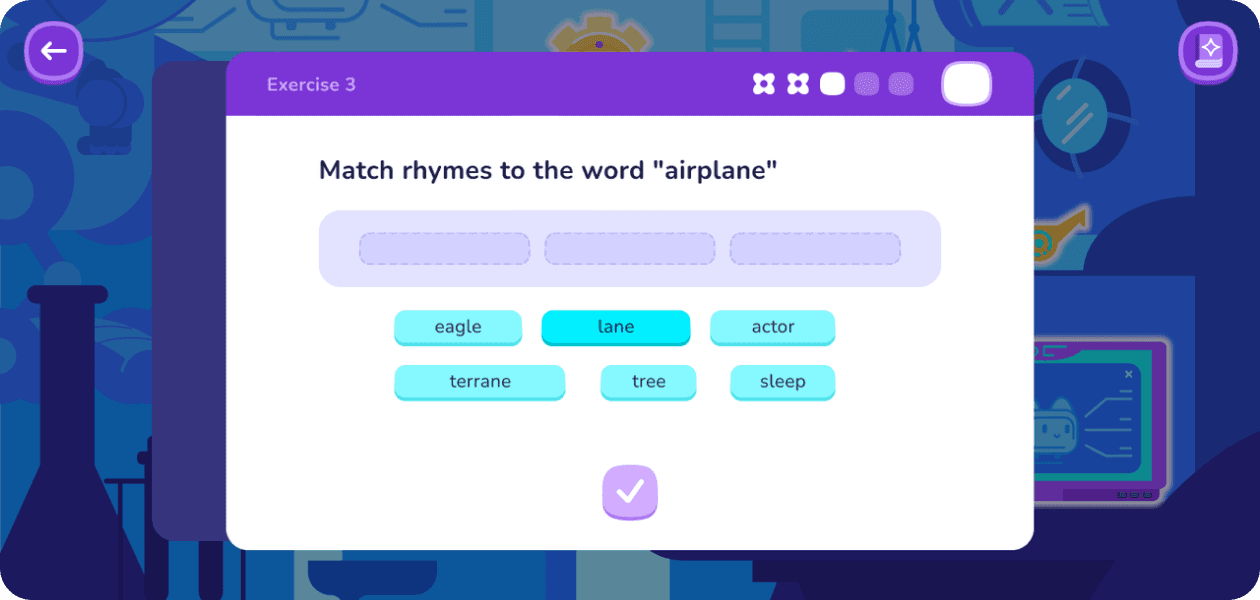
I'd like to share my experience at Uchi.ru, using the "How to Learn" course (a collaboration with Disney) as an example of my workflow for creating educational courses. While developing online courses, I researched the education market, consulted with industry experts, conducted qualitative studies, and designed the learning experience. I also conceptualised game settings, created user flows, and contributed to content development. I took on a lead role for several courses and managed team processes throughout the projects.
The challenge
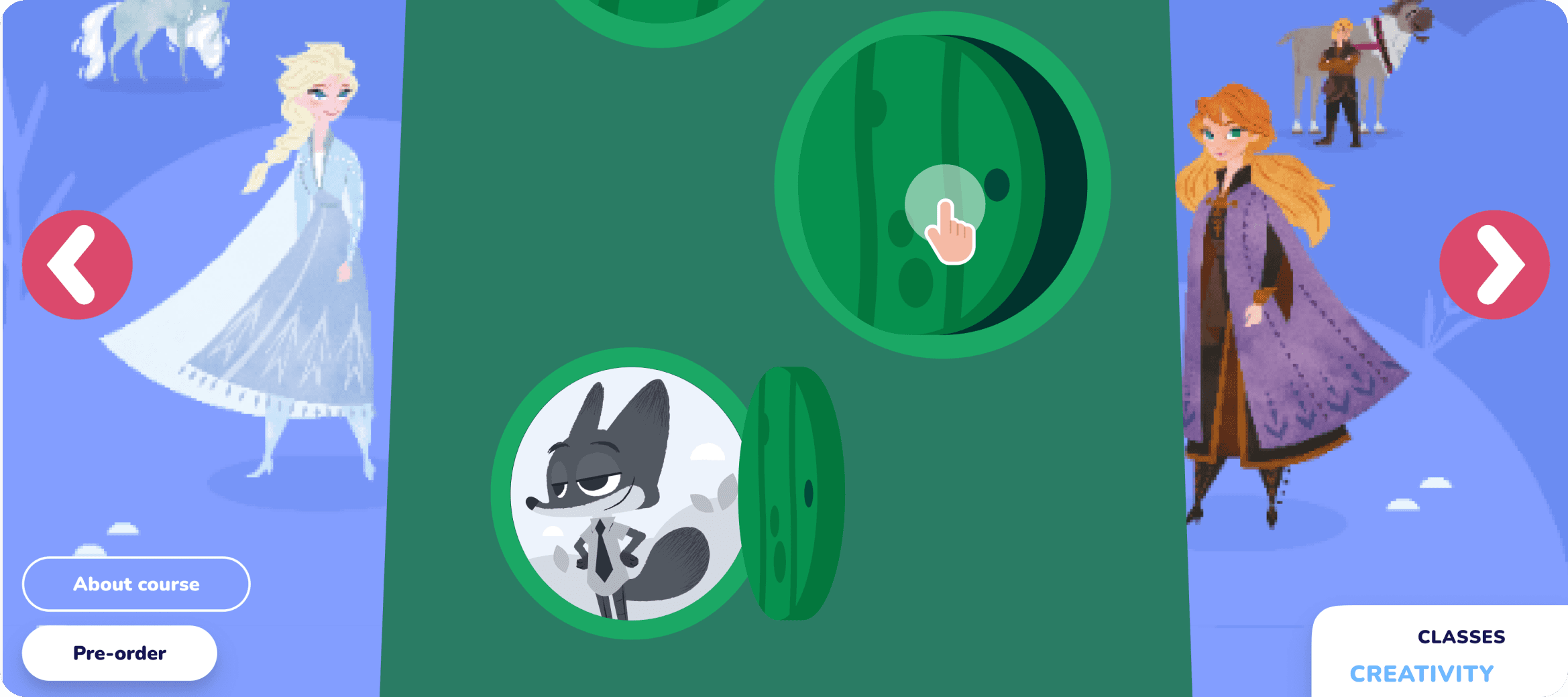
I faced the challenge of creating an educational course for schoolchildren using Disney illustrations and characters. While Disney provided the franchise, all visuals needed approval from their U.S. office. My team handled most of the course and content development.
From a business perspective, the goal was to boost brand recognition using the well-known Disney franchise. Personally, my aim was to lead a major project from concept to launch while experimenting with various hypotheses.
Research
I began the project by conducting extensive research, in collaboration with the product manager, to identify a suitable topic for the course. Our findings showed that the most profitable courses were in math and programming, but since those were already offered on the platform, we opted for a new theme: improving learning skills with the "How to Learn" course.
The next step was to research the course theme with the product manager, finding ways to explain complex topics like brain function and learning organisation to children in a simple, engaging way. We were guided by insights from Polina Krivykh, a psychophysiologist, lecturer, curator of the School of Lecturers of the Evolution Foundation, and TEDx speaker. Our research also revealed that Disney characters are perceived as "girl" or "boy" characters, so we made sure to include a mix of both in the course.
Design and delivery
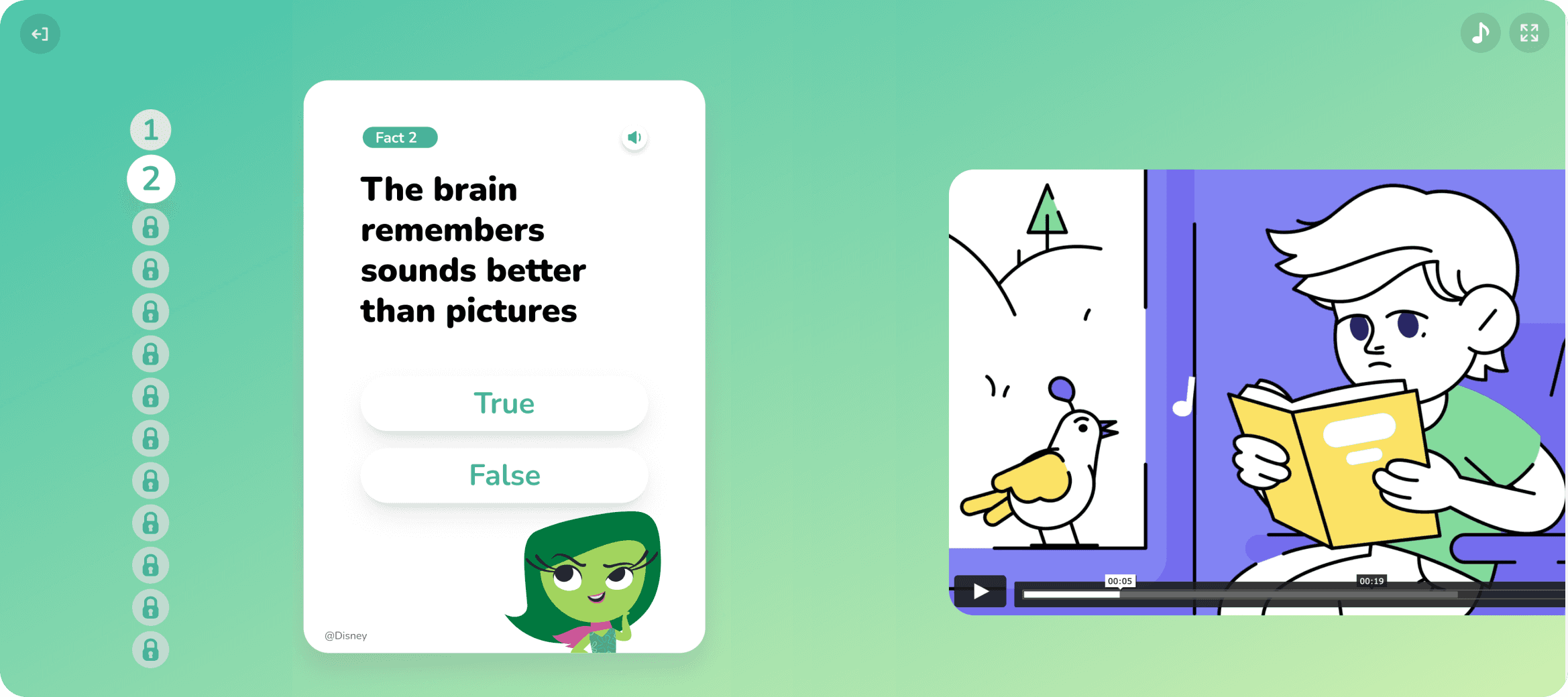
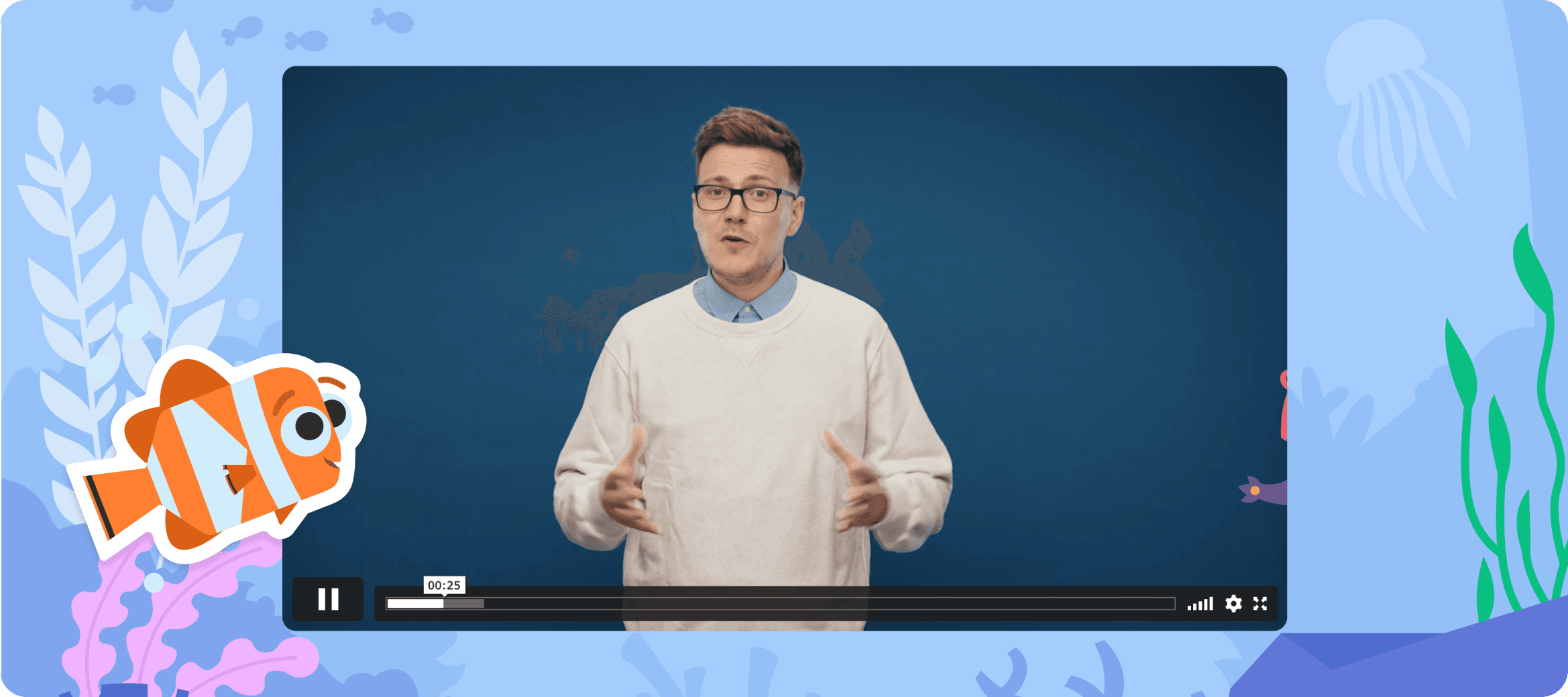
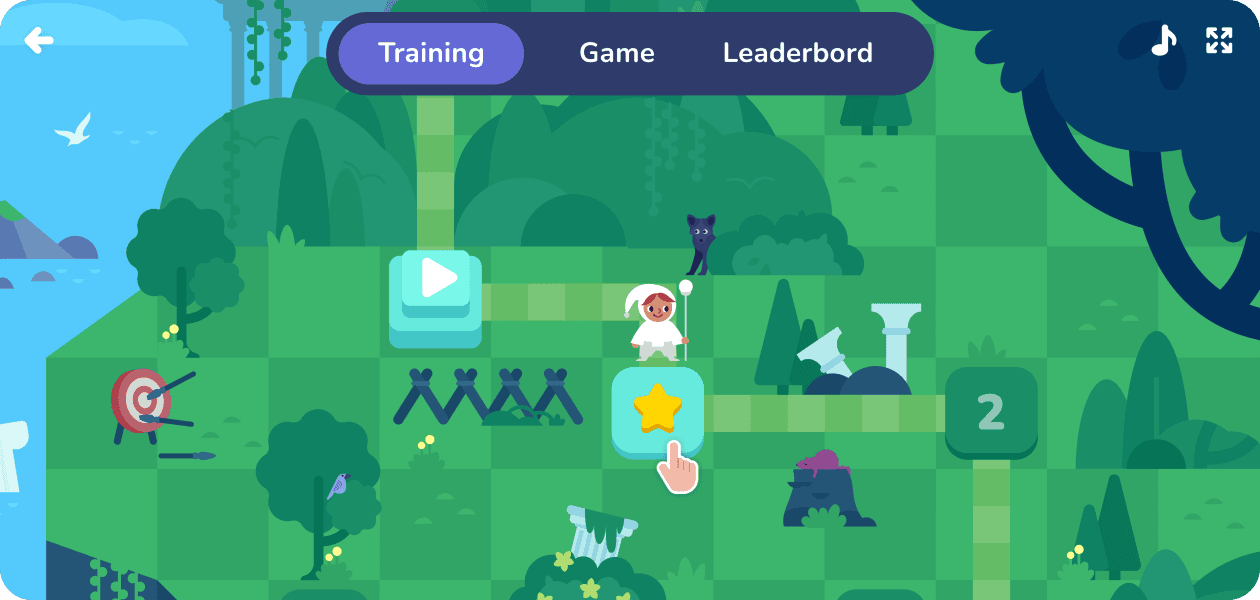
The course format included educational cartoons, videos featuring neurogymnastics, and numerous interactive games designed to develop essential skills like concentration, attention, and memory. I organised all the materials into a cohesive structure and, along with the product manager, created a roadmap and release schedule.
The course was launched in multiple parts. We went through several delivery sprints, from UX design to the final release. During these sprints, I conducted numerous UX interviews with children, which helped me enhance my skills in designing interfaces for kids.
Results
After launching the course, we implemented several analytics-based improvements, the most significant being a change in user flow. This adjustment aimed to boost conversion rates, and we validated its effectiveness through A/B testing. We successfully achieved our business goal: the course performed well, with benchmarks matching those of the most popular courses on the platform. Using the workflow developed for this course, I created a streamlined process that I applied to design future courses.
Other courses
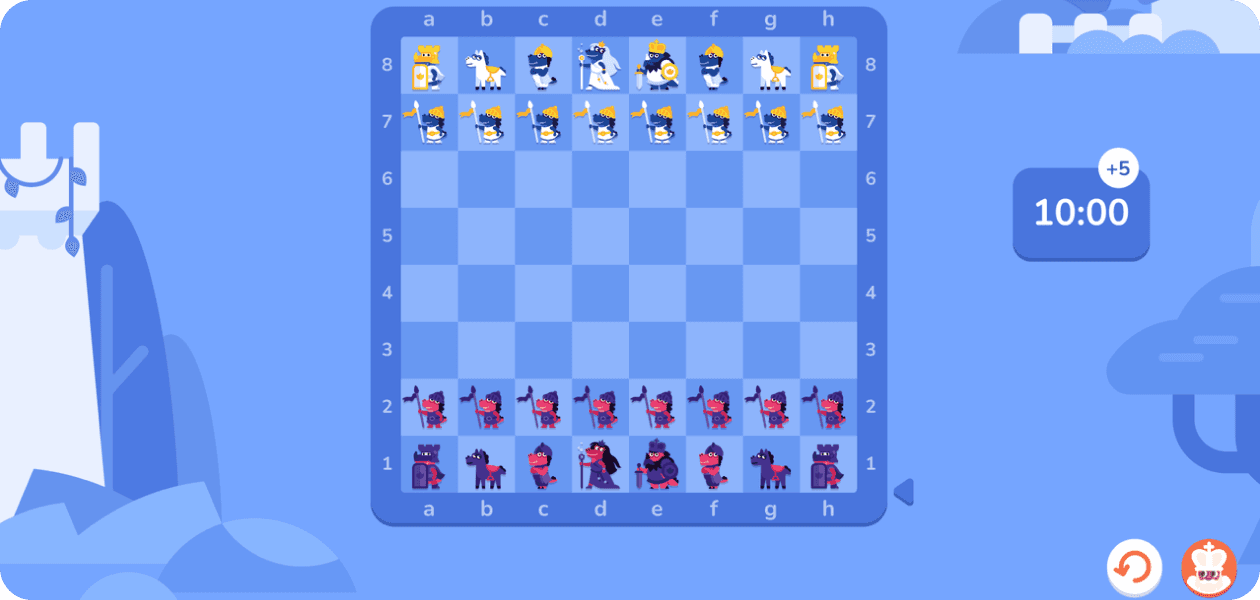
Chess
Learning to play chess online through the game. The conversion rate is 3 times the benchmark. Adding small animations to the screens reduced the falloff between screens by 2x. Monthly students: 500,000. My challenges: design more game experience and teach children chess through gamification; optimize delivery by using many templates of game mechanics and systematizing content creation.

Geometry, grades 5-7
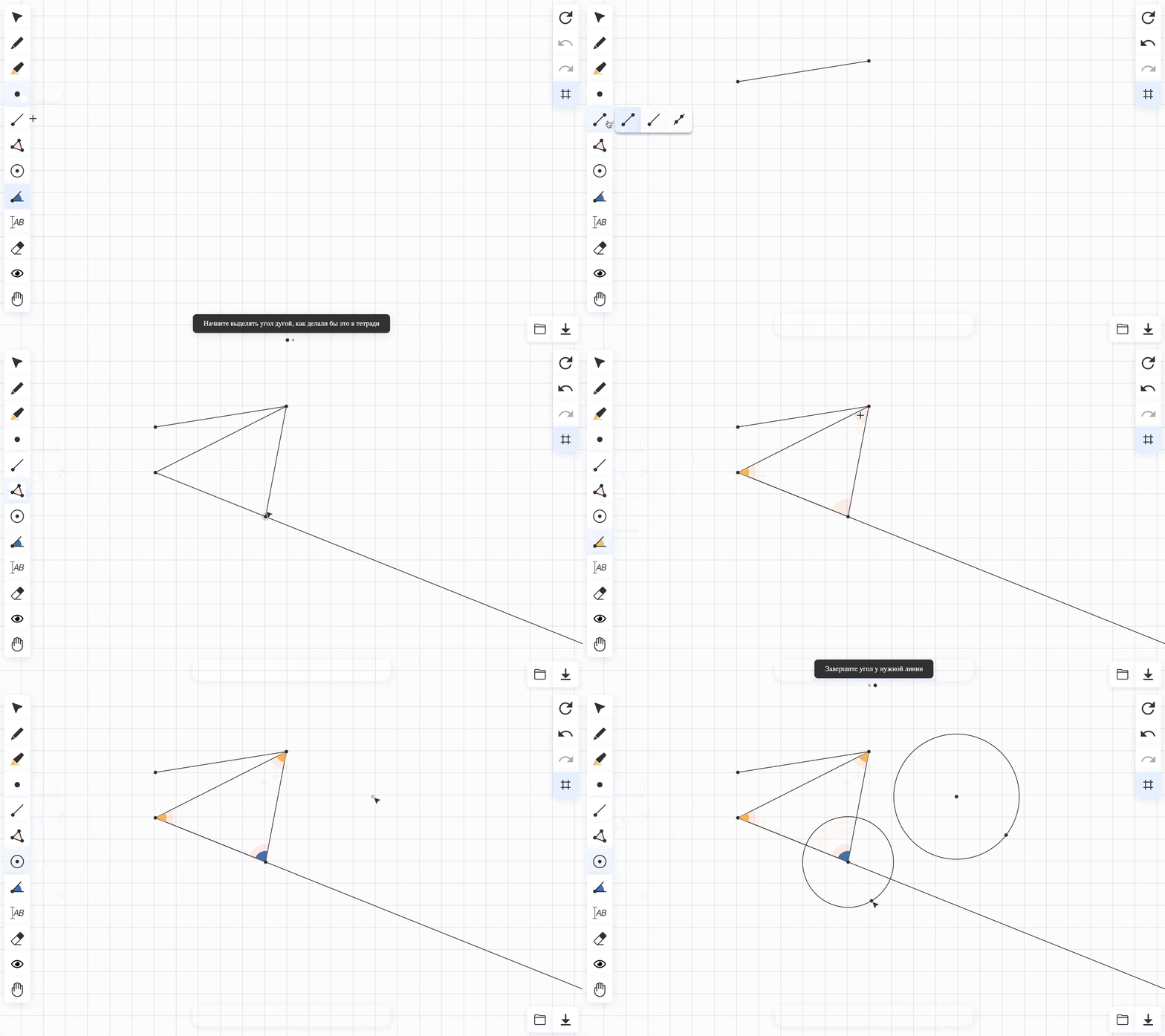
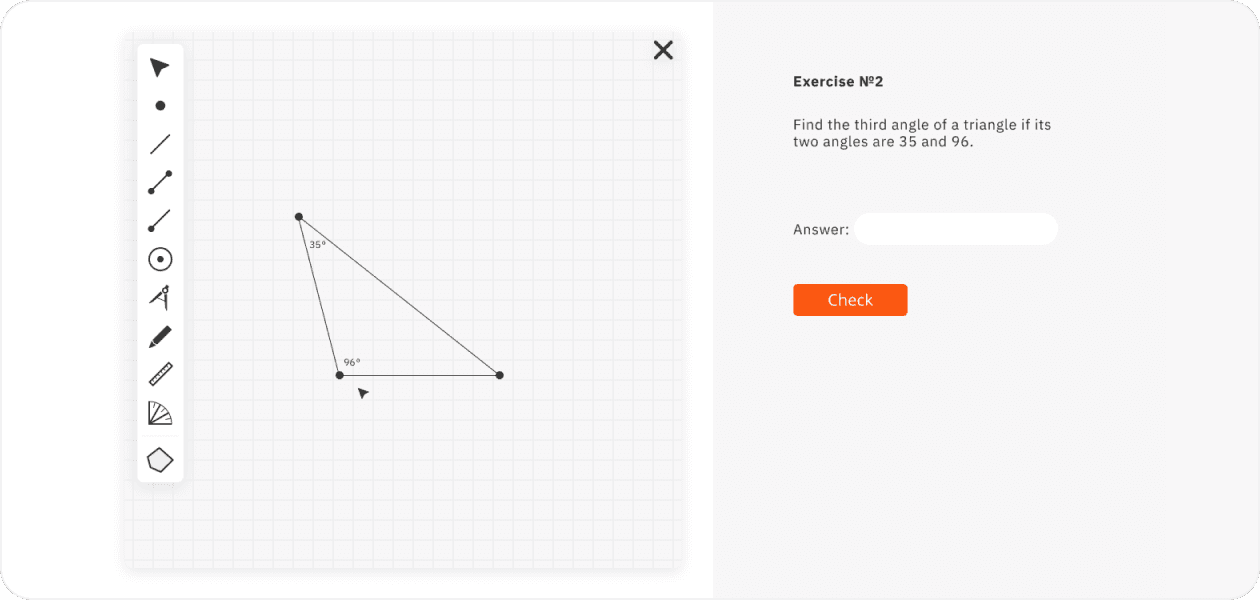
An interactive geometry textbook for teachers and students. I made a workspace for drawings, a "sandbox" where students and teachers can draw like in a notebook to find a solution to a given task. Positive feedback among teachers: 40%. Monthly students: 60,000, teachers: 10,000. My challenges: design a non-standard graphical editor interface for drawings; learn how high-school children use interfaces and how that differs from elementary-school children.
Emotional intelligence
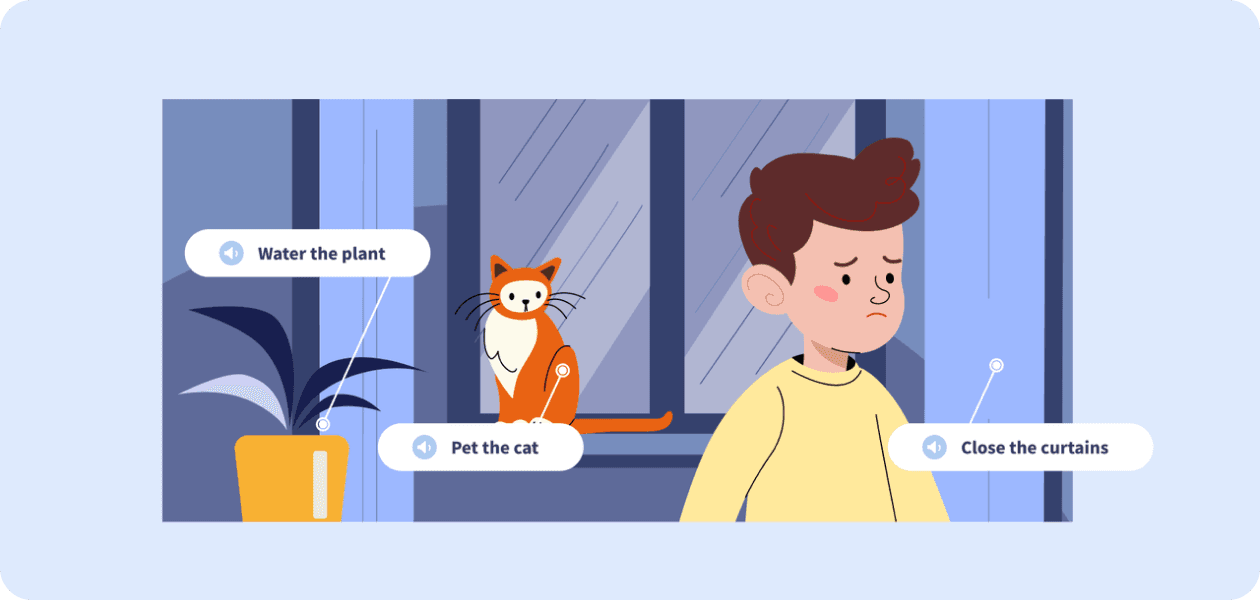
An interactive comic book with a storyline the child can choose. Through storytelling about emotions and simple mechanics, the child learns. Adding a common monetization "congrats" system increased long-term retention by 2x. I created an admin panel for all course mechanics, which sped up development by 3x. Monthly students: 350,000. My challenges: introduce limits on the development time and cost of the course (I built a constructor from a set of mechanics, with templates filled in by methodologists) and add more experiments (I ran tests with funnels to the paywall).
Reading, preschool
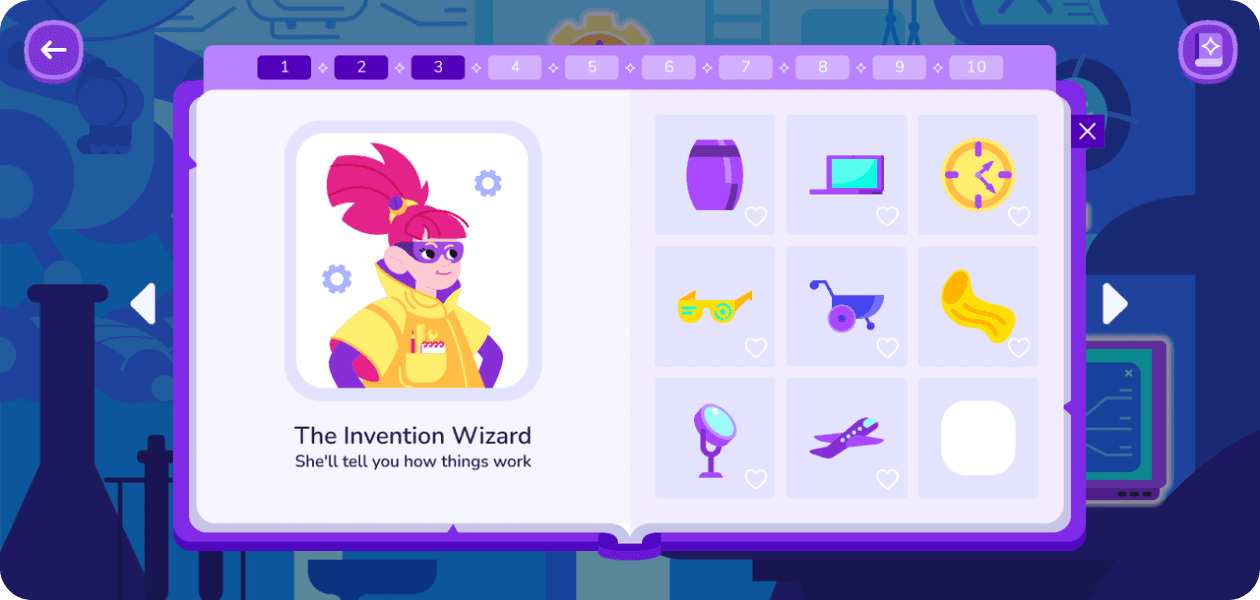
An online course teaching reading through letters, syllables, small texts and children's books. I designed the mini-texts part. Monthly students: 400,000. My challenges: make a child interested in reading rather long texts; embed voice explanations so the child finds them but doesn't keep them on all the time; understand how preschool children interact with the interface.